
Mill Lane is in Monks Eleigh, Ipswich and in Babergh district. IP7 7AA is located in the Box Vale electoral ward, within the English Parliamentary constituency of South Suffolk. This postcode has been in use since 1980-01-01.
StreetScan combines information about Mill Lane, Monks Eleigh, Ipswich, IP7 7AA and displays a report on the quality of life in this place and its surroundings.
Nearby postcodes are: IP7 7JE, IP7 7JG, IP7 7JQ, IP7 7JH, IP7 7LG, IP7 7LQ, IP7 7BA, IP7 7AB, IP7 7JJ.
In the UK, the overall gender distribution is approximately 49% male and 51% female. However, the area surrounding IP7 7AA has a female population much higher than UK average, with 56.8% of the population being female. Several factors can contribute to this. Women generally live longer than men, resulting in a higher proportion of women in neighborhoods with significant elderly populations. Typically, as people grow older, they tend to relocate from city center addresses to suburban areas, smaller towns, and rural locations. Consequently, these areas often have a higher number of females. A higher female population can also be found in areas with industries that employ more women, such as healthcare, education, and retail.
| 2011 | 2021 | 10y change (pp) | UK Average | postcode vs UK (pp) | |
|---|---|---|---|---|---|
| Female | 53.3% | 56.8% | 3.5% | 51.0% | 5.8% |
| Male | 46.7% | 43.2% | -3.5% | 49.0% | -5.8% |
Across the UK, the average relationship status breakdown is roughly 44% married, 38% single, 9% divorced, 6% widowed, and 2% separated.
In the immediate vicinity of IP7 7AA there is a very large concentration of residents that are married - 63.5% of the resident population. In contrast, the average marriage rate across the census is about 44%.
Areas with a high percentage of married residents are typically suburban neighborhoods, towns with good schools and family-friendly amenities, and regions with affordable, spacious housing options. Additionally, such areas can be popular among retirees.
| 2011 | 2021 | 10y change (pp) | UK Average | postcode vs UK (pp) | |
|---|---|---|---|---|---|
| Single | 21.1% | 15.9% | -5.2% | 37.9% | -22.0% |
| Married: Opposite sex | 57.4% | 63.5% | 6.1% | 44.2% | 19.3% |
| Separated | 2% | 1.1% | -0.9% | 2.2% | -1.1% |
| Divorced | 7.8% | 10.1% | 2.3% | 9.1% | 1.0% |
| Widowed | 11.8% | 9.5% | -2.3% | 6.1% | 3.4% |
Across the UK, the average 48.4% rated their health as Very Good, 33.6% as Good, 12.7% as Fair, 4% as Bad, and 1.2% as Very Bad.
Population age significantly impacts residents' health. Additionally, socioeconomic status plays a crucial role: higher income levels and lower poverty rates are linked to better health outcomes. Affluent areas benefit from higher living standards, access to private healthcare, and healthier lifestyle choices.
| 2011 | 2021 | 10y change (pp) | UK Average | postcode vs UK (pp) | |
|---|---|---|---|---|---|
| Very good health | 47.1% | 48.4% | 1.3% | 48.4% | 0.0% |
| Good health | 31.8% | 30.5% | -1.3% | 33.6% | -3.1% |
| Fair health | 16.1% | 17.4% | 1.3% | 12.7% | 4.7% |
| Bad health | 2.5% | 3.3% | 0.8% | 4.0% | -0.7% |
| Very bad health | 2.5% | 0.5% | -2.0% | 1.2% | -0.7% |
During the 2021 census, the educational qualifications of residents across the UK were as follows: 18.2% had no qualifications, 9.6% had 1-4 GCSEs, 13.4% had 5 or more GCSEs and 1-2 A/AS Levels, 16.9% had 2 or more A Levels, 33.8% held a degree (or equivalent), and 5.4% had completed an apprenticeship.
| 2011 | 2021 | 10y change (pp) | UK Average | postcode vs UK (pp) | |
|---|---|---|---|---|---|
| No qualifications | 14.7% | 13% | -1.7% | 18.2% | -5.2% |
| 1-4 GCSEs or Equivalent | 12.7% | 9.4% | -3.3% | 9.6% | -0.2% |
| 5 or more GCSEs, an A-Level or 1-2 AS Levels | 14.7% | 10.9% | -3.8% | 13.4% | -2.5% |
| Apprenticeship | 2% | 7.3% | 5.3% | 5.3% | 2.0% |
| HNC, HND or 2+ A Levels | 10.3% | 14.6% | 4.3% | 16.9% | -2.3% |
| Degree or Similar | 40.2% | 41.7% | 1.5% | 33.8% | 7.9% |
| Other | 5.4% | 3.1% | -2.3% | 2.8% | 0.3% |
In this area, the population is predominantly white, with 98.6% identifying as such, significantly higher than the UK average of 81.4%. This indicates a lower level of ethnic diversity compared to the broader UK population.
| 2011 | 2021 | 10y change (pp) | UK Average | postcode vs UK (pp) | |
|---|---|---|---|---|---|
| Mixed White and Asian | 0% | 0.5% | 0.5% | 0.8% | -0.3% |
| Mixed White and Caribbean | 0.8% | 0% | -0.8% | 0.9% | -0.9% |
| Mixed Other | 0% | 0.9% | 0.9% | 0.8% | 0.1% |
| White | 99.2% | 98.6% | -0.6% | 81.4% | 17.2% |
In this area, 93.4% of the population were born in the United Kingdom, which is higher than the UK average of 83.2%.
| 2011 | 2021 | 10y change (pp) | UK Average | postcode vs UK (pp) | |
|---|---|---|---|---|---|
| United Kingdom | 92.6% | 93.4% | 0.8% | 83.2% | 10.2% |
| European Union | 2.9% | 4.2% | 1.3% | 6.1% | -1.9% |
| Rest of Europe | 0.4% | 0% | -0.4% | 0.8% | -0.8% |
| Africa | 1.2% | 0.9% | -0.3% | 2.7% | -1.8% |
| Middle East and Asia | 0.4% | 0% | -0.4% | 5.6% | -5.6% |
| The Americas and the Caribbean | 1.7% | 1.4% | -0.3% | 1.3% | 0.1% |
| Oceania | 0.8% | 0% | -0.8% | 0.3% | -0.3% |
| 2011 | 2021 | 10y change (pp) | UK Average | postcode vs UK (pp) | |
|---|---|---|---|---|---|
| Born in the UK | 92.1% | 93.4% | 1.3% | 83.2% | 10.2% |
| 10+ Years | 2.1% | 5.6% | 3.5% | 9.8% | -4.2% |
| 5-10 Years | 0% | 0.5% | 0.5% | 2.9% | -2.4% |
| Less than 2 years | 5.8% | 0.5% | -5.3% | 1.9% | -1.4% |
| 2021 | UK Average | postcode vs UK (pp) | |
|---|---|---|---|
| United Kingdom | 85.4% | 76.7% | 8.7% |
| Ireland | 2.3% | 0.6% | 1.7% |
| Romania | 0.9% | 0.9% | 0.0% |
| Other EU countries | 0.5% | 1.5% | -1.0% |
| South and Eastern Africa | 0.5% | 0.2% | 0.3% |
| North America and the Caribbean | 0.9% | 0.3% | 0.6% |
| No passport held | 9.4% | 13.5% | -4.1% |
| 2021 | UK Average | postcode vs UK (pp) | |
|---|---|---|---|
| No religion | 33% | 37.2% | -4.2% |
| Christian | 63.3% | 46.2% | 17.1% |
| Buddhist | 0.5% | 0.5% | 0.0% |
| Other religion | 0.5% | 0.6% | -0.1% |
| Not answered | 2.8% | 6.0% | -3.2% |
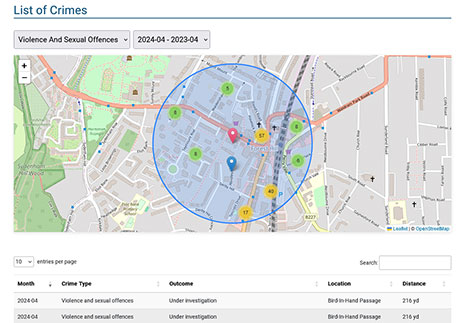
Over the last 12 months, the overall crime rate around Mill Lane was 18.8 per 1,000 residents, which is 37.5% lower than the Box Vale average. The most reported crime type was Burglary.
Mill Lane has the 15th lowest crime rate of 60 local areas in Box Vale and the 82nd lowest crime rate of 304 local areas in Babergh .
Violent and sexual offences accounted for around 4.7 crimes per 1,000 residents and have been falling year on year. Over the last decade, overall crime has fallen by about -72.1%.
Households in this area have a similar level level of wealth to the average household in England and Wales. 52% of analyzed areas in England and Wales have lower average household annual income than this area.
| Address | Sale Price | Sale Date | Price Estimate 2025 |
|---|---|---|---|
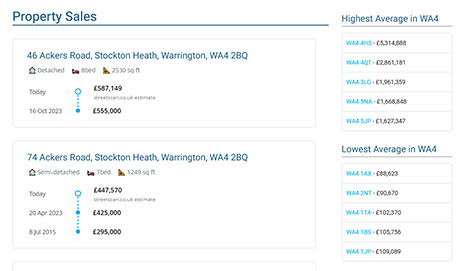
| Old Mill House Mill Lane, Ipswich, Suffolk Detached, an established residential building | £875,000 | 2014-09-10 | £1,273,311 |
| Old Mill House Mill Lane, Ipswich, Suffolk Detached, an established residential building | £580,000 | 2003-04-30 | £1,271,637 |
IP7 7AA area has a low unemployment rate. According to Census 2021, 2% residents of this area were unemployed, while the average in the UK was 4.83%. A low level of unemployment in an area indicates a strong job market, where most people who are seeking work can find employment. This generally reflects a healthy economy in the area.
The percentage of retired residents living in IP7 7AA area is much higher than the country's average. According to Census 2011, 43% residents of this area were retired, while the average in the UK was 14%.
| Retired | 82 |
| Full-Time Employee | 44 |
| Self-Employed | 19 |
| Part-Time Employee | 18 |
| Other | 9 |
| Long-Term Sick or disabled | 6 |
| Unemployed | 4 |
| Looking after home or family | 3 |
| Student (economically inactive) | 3 |
| Full-Time Student (with or without job) | 1 |
| Professional, scientific and technical activities | 19 |
| Wholesale and retail trade; repair of motor vehicles and motor cycles | 14 |
| Education | 9 |
| Administrative and support service activities | 9 |
| Other | 8 |
| Public administration and defence; compulsory social security | 7 |
| Information and communication | 6 |
| Accommodation and food service activities | 6 |
| Financial and insurance activities | 6 |
| Human health and social work activities | 5 |
| Construction | 4 |
| Manufacturing | 4 |
| Agriculture, forestry and fishing | 3 |
| Real estate activities | 3 |
| Transport and storage | 2 |
| Ofsted Overall Effectiveness | Distance | Establishment Type | Has Nursery Classes | Gender | More Info | |
|---|---|---|---|---|---|---|
| Monks Eleigh Church of England Voluntary Controlled Primary School Churchfield , Monks Eleigh IP7 7JH | - not rated | 260 yd | Voluntary controlled school | No | Mixed | More About School |
| Bildeston Primary School Newberry Road , Bildeston IP7 7ES | 3out of 4 | 3,527 yd | Community school | No | Mixed | More About School |
| Ofsted Overall Effectiveness | Distance | Establishment Type | Has Nursery Classes | Gender | More Info | |
|---|---|---|---|---|---|---|
| Gable End Fen Lane , IP7 7NL | - not rated | 4,825 yd | Other independent special school | Not Applicable | Mixed | More About School |
School statistics for this postcode are based on Ofsted rankings.
| Business Name | Address | Food hygiene rating | Distance |
|---|---|---|---|
| Monday Lunch Club | Monks Eleigh Village Hall, Church Hill | 633 yd | |
| Corncraft Ltd | Corncraft, Corncraft Businesses | 783 yd |
| Facility Name | Sport Objects | Distance |
|---|---|---|
| Monks Eleigh Playing Field (Closed) Church Hill | grass pitches | 372 yd |
| Monks Eleigh Millennium Green CHURCHFIELD | grass pitches, tennis courts | 380 yd |
This statistics are based on Active Places Data - Contains Data © Sport England
| Percentage of premises that have Superfast Broadband (30Mbit/s or greater) coverage from fixed broadband | 100.0% |
| Percentage of premises that have Ultrafast Broadband (100Mbit/s or greater) coverage from fixed broadband | 0.0% |
| Percentage of premises that have Ultrafast Broadband (300Mbit/s or greater) coverage from fixed broadband | 0.0% |
| Percentage of premises that have coverage from a Gigabit capable service from fixed broadband | 0.0% |
| Percentage of premises unable to receive 2Mbit/s | 0.0% |
| Percentage of premises unable to receive 5Mbit/s | 0.0% |
| Percentage of premises unable to receive 10Mbit/s | 0.0% |
| Percentage of premises unable to receive 30Mbit/s | 0.0% |
Broadband statistics are based on Ofcom's Communications Market Report (CMR) 2022.